
The 72 hour power cut plan: how a UK household keeps going for three days
Last reviewed 24 October 2026 · 7 min read
Quick checklist
Quick checklist
0 of 7 doneBuild your 72 hour power cut plan before the lights go out
Use this as a planning case, not a prediction. Government guidance says most UK power cuts are short-lived, though longer outages are possible. Start with what you own: a torch, blankets, phone cable, familiar tins, a manual tin opener and a clean water container. Our power cuts hub has more advice, and the UK power cut checklist is a shorter companion.
Plan on at least three litres of water per person per day. Store tap water in clean, food-grade containers with lids closed, and allow extra for pets or care needs. Keep familiar no-cook food handy, with options for allergies and special diets.
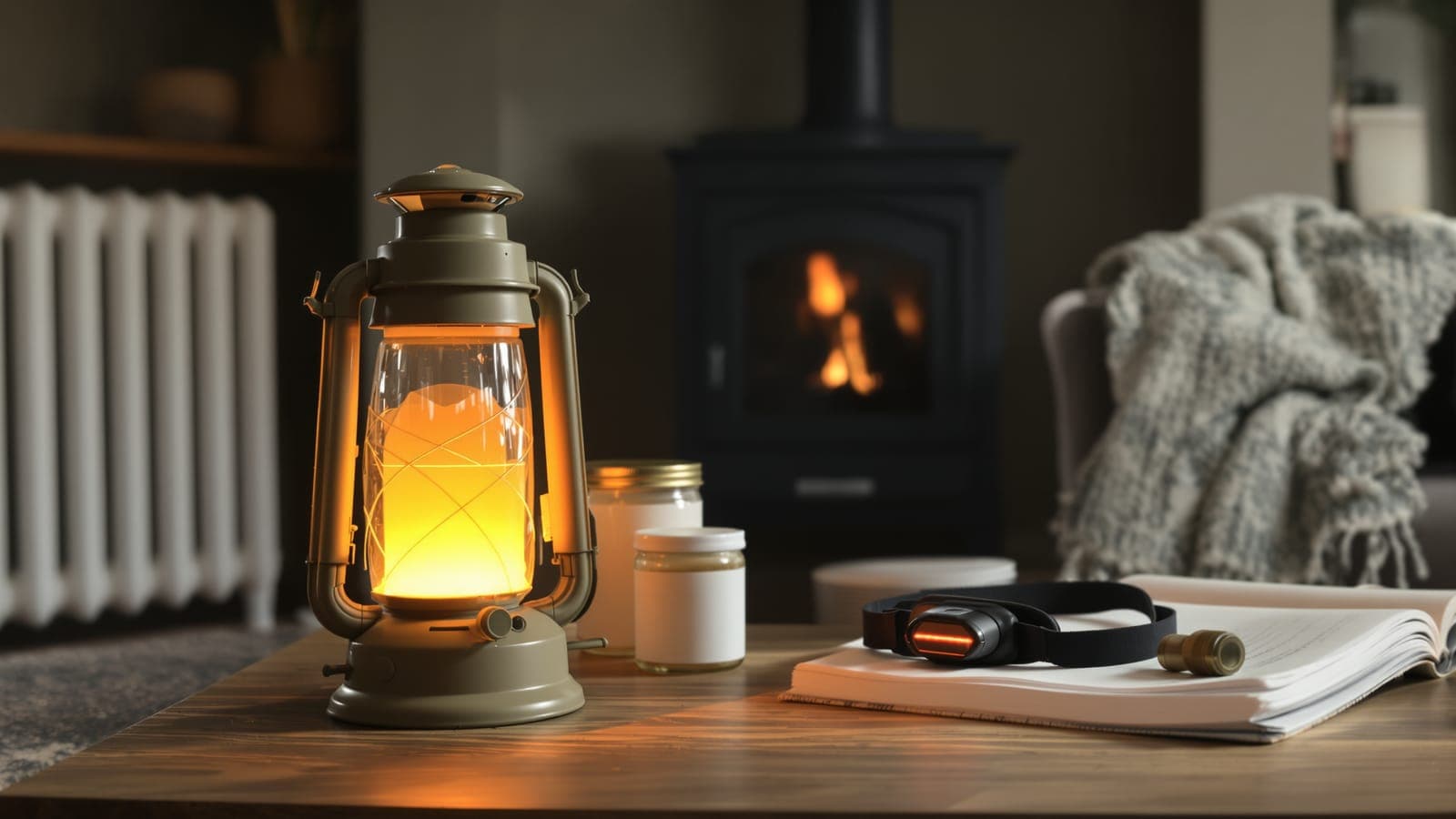
If buying something, start with light or phone charging. Look for a stable LED lantern with simple controls; consider a rechargeable LED lantern (Retailer link coming soon) if you do not already have a working torch or lamp. Using what you own is fine.
Day 1: get the basics working
Report the outage and collect information
Check whether nearby homes are also affected. Call 105 in England, Scotland and Wales, or 03457 643643 in Northern Ireland, to report the cut or get updates. Stay away from fallen power lines and damaged equipment; do not repair wiring yourself.
Switch off appliances such as irons and electric cookers. Unplug sensitive electronics if practical. Save phone battery with low-power mode, a dim screen and texts instead of long calls. Choose a power bank from a known brand and reputable UK seller, with UKCA or CE marking. A 20,000 mAh power bank is one option, but a charged bank you already own will do.
Set up light and keep warm in a power cut
Put a lantern in the main room and a torch where it is easy to find. Save your phone battery rather than using its torch. Close curtains, shut unused rooms and wear layers; bring blankets into one room. Our guide to keeping warm in a power cut has more tips.
Use a battery radio for updates if the internet or television stops working. A battery FM/AM radio (Retailer link coming soon) is useful if you have working batteries. Check on neighbours, especially anyone living alone or relying on powered equipment.
Power cut food safety: protect the fridge and freezer
Keep fridge and freezer doors shut. Official estimates are up to four hours for a fridge, 48 hours for a full freezer and about 24 hours for a half-full one, but conditions vary. These are not guarantees. Use a fridge thermometer if you have one, follow national food safety guidance and never taste food to test it.
If a cut is forecast, fill a clean insulated flask while the kettle works. A food flask can keep hot water ready, but must be filled before the outage. Otherwise, prioritise food that needs no heating. See emergency food that does not need cooking.
Day 2: conserve supplies and check what has changed
Check people first: is anyone cold, unwell, short of water or relying on equipment that needs charging? Check network updates, agree check-in times and keep numbers on paper.
Keep the freezer shut and follow food safety guidance for thawed food. Use familiar cupboard foods and save clean water for drinking and food preparation.
Keep warm with layers, blankets and closed curtains. Never use a camping stove, gas heater, barbecue, patio heater, generator or charcoal burner indoors or in a garage, shed, tent porch or doorway, and never use a gas oven to heat a room. These can cause fire or carbon monoxide poisoning. CO is invisible and odourless. Keep a working alarm fitted as instructed, marked BS EN 50291. A carbon monoxide alarm is a useful safeguard, not permission to use fuel-burning equipment indoors.
Day 3: decide whether you need extra support
Take stock of water, food, phone charge, batteries and warmth. If supplies are low, ask family, neighbours or local services for practical help. Keep checking on anyone who may struggle to manage alone.
For powered medical equipment, follow the plan agreed with the supplier and clinical team, and contact them early if backup power may run out. Check the Priority Services Register and power cut support. In Northern Ireland, ask about the Customer Care Register. If the home is too cold or health needs cannot be managed safely, arrange to go somewhere suitable.
When power returns, check appliances for obvious damage before using them. Follow official food safety advice and discard food you cannot confirm is safe. Recharge devices, replace used batteries and note what you would like to have closer to hand next time.
Do this today (free)
Put a torch, phone cable, blankets, tin opener and familiar no-cook food together. Write down the power cut number and two useful contacts. Show everyone where the items are, then charge phones and power banks while electricity is on.
If you have £25 to spend
Buy for your biggest gap first: a dependable light, phone charging or a battery radio. Compare features and check the current price. Do not buy specialist equipment if your existing torch, charged phone, blankets and cupboard food cover the basics.
Questions people ask
How long do most UK power cuts last?
Most UK power cuts are short-lived and affect a local area, according to the government’s Be Ready guidance. Longer outages are possible, however, and can last several days. A 72-hour plan is a practical way to prepare for that longer case without assuming it is likely to happen.
How much water should I store for a three-day power cut?
The government’s preparedness guidance recommends at least three litres per person per day. For three days, that is nine litres per person. Store tap water in clean, food-grade containers with secure lids, and allow extra for pets or individual care needs. Follow any water company advice if the public supply is interrupted or affected.
Is food in the fridge safe after a power cut?
It depends on how long the fridge has been without power, its temperature and how often the door was opened. Official guidance gives up to four hours as an estimate, not a guarantee. Keep the door shut, use a fridge thermometer if you have one and follow national food safety advice. Never taste food to test it.
What should I do if the power is still off on day three?
Check updates from your network operator and review the household’s water, food, warmth and phone charge. Ask trusted neighbours or family for practical support. If anyone relies on powered medical equipment, contact the equipment supplier and clinical team. If someone is in immediate danger, call 999.
Sources and further reading
- UK Government Be Ready: Power cuts
- National Grid: What to do during a power cut
- Food Standards Agency: Food safety in a power cut
- Food Standards Scotland: Food safety during a power cut
- GOV.UK: Carbon monoxide, general information
The free Fireside Folk Starter Pack includes a household emergency plan template, emergency contact sheet, 72-hour kit checklist, grab bag checklist, storm and power cut checklist, food rotation checklist, documents checklist, family communication plan and monthly check sheet.
Sources
- beready.campaign.gov.uk/be-informed-about-hazards/power-cuts
- powercuts.nationalgrid.co.uk/power-cut-advice/what-to-do
- gov.uk/government/publications/food-safety-in-a-power-cut-advice-for-consumers/food-safety-in-a-power-cut-advice-for-consumers
- foodstandards.gov.scot/consumer-advice/food-safety/food-safety-in-the-kitchen/power-cuts
- gov.uk/government/publications/carbon-monoxide-properties-incident-management-and-toxicology/carbon-monoxide-general-information
Related in this hub


firesidefolk.com/power-cuts/72-hour-power-cut-plan · Last reviewed 24 October 2026 · Fireside Folk